How we built a climate action ecosystem engaging almost 2000 diverse actors
There’s no shortage of climate ambition in Germany. Everyday, startups develop new solutions, corporates evaluate their supply chain, investors look for the next sustainable unicorn, and researchers uncover new insights.
What these actors – and Germany – often lack, is the infrastructure to turn their individual efforts into collective momentum: connection.
That was the missing piece that Impact Hub Berlin set out to address, and successfully engaged 1,970 people in one year.
Where we started
In 2024, Impact Hub Berlin kicked-off a new project: building a Climate Action Ecosystem. Funded through the Nachhaltig Wirken programme, this three-year project began with a clear goal: to strengthen the climate action ecosystem in Germany and build something that lasts.
The challenge of building a goal-oriented ecosystem is familiar to everyone working at the intersection of innovation and sustainability. Climate actors do meaningful work, but largely in silos. Startups struggle to find the right mentors or investors. Important research never reaches the right people. Capacity-building resources exist, but aren’t always accessible.
The broader ecosystem lacked a shared sense of direction – a place where emerging trends could be translated into actionable strategy.
This obstacle isn’t unique to climate action. Neither is it new to us at Impact Hub Berlin. Over the years, the Impact Hub Network has developed a methodology for exactly this.
Our approach: issue-based ecosystem building
We call it issue-based ecosystem building: a structured methodology for bringing scattered stakeholders together to create collective action.
The methodology works through six phases:
- Understand: mapping the landscape and its gaps
- Engage: connecting with key stakeholders
- Convene: bringing the right actors together around a shared purpose
- Activate: creating initiatives that co-create solutions
- Consolidate: reviewing collective efforts and capturing learnings
- Amplify: scaling verified solutions and facilitating organic growth of the ecosystem
Crucially, this isn’t a linear process. As ecosystem builders, we revisit and refine who we’re engaging and around which issues at every stage. The goal isn’t to run a programme from beginning to end – it’s to shift a system in a human-centred way, acknowledging the inherent complexities that come with that.
For the Climate Action Ecosystem, we designed an approach tailored to the needs of relevant actors. With the core architecture of our ecosystem building methodology as the foundation, we integrated our three-pillars of impact or change mechanisms:
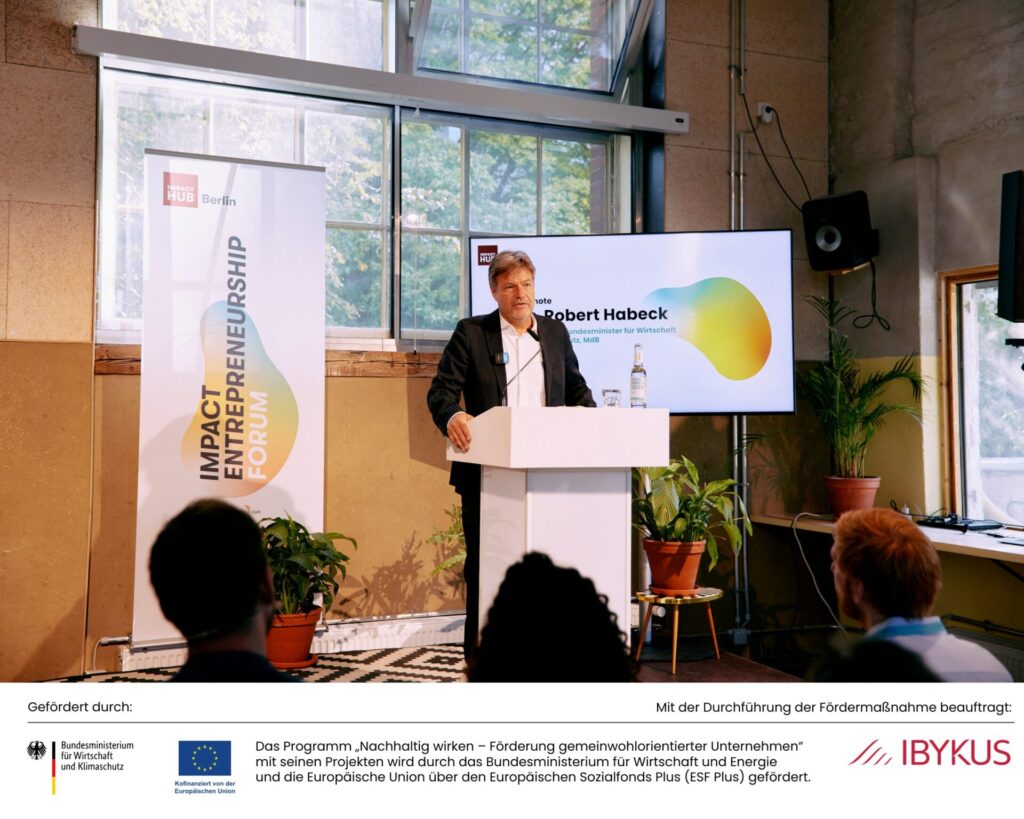
Connect – activating the ecosystem through curated, high-quality formats that bring the right actors together. This included the Impact Entrepreneurship Forum, startup pitches and networking formats, designed to foster genuine relationship-building.
Enable – building lasting capacity through our online learning platform, RISE Academy, with structured courses, webinars, expert-led workshops, and a growing library of practical resources. The goal was to make learning around climate innovation accessible to impact innovators and founders at every stage.
Inspire – providing strategic foresight through annual Trend Reports and the AI Stewardship Programme, connecting global experts and positioning Impact Hub Berlin as a thought leader on the issues shaping climate innovation. The 2024 Trend Report focused on AI for Inclusive Climate Action – a signal of where the field is heading, and how to do it equitably and sustainably.
Impact of ecosystem activation
The results from the first year of implementation tell a story of genuine traction and a clear need amongst climate actors.
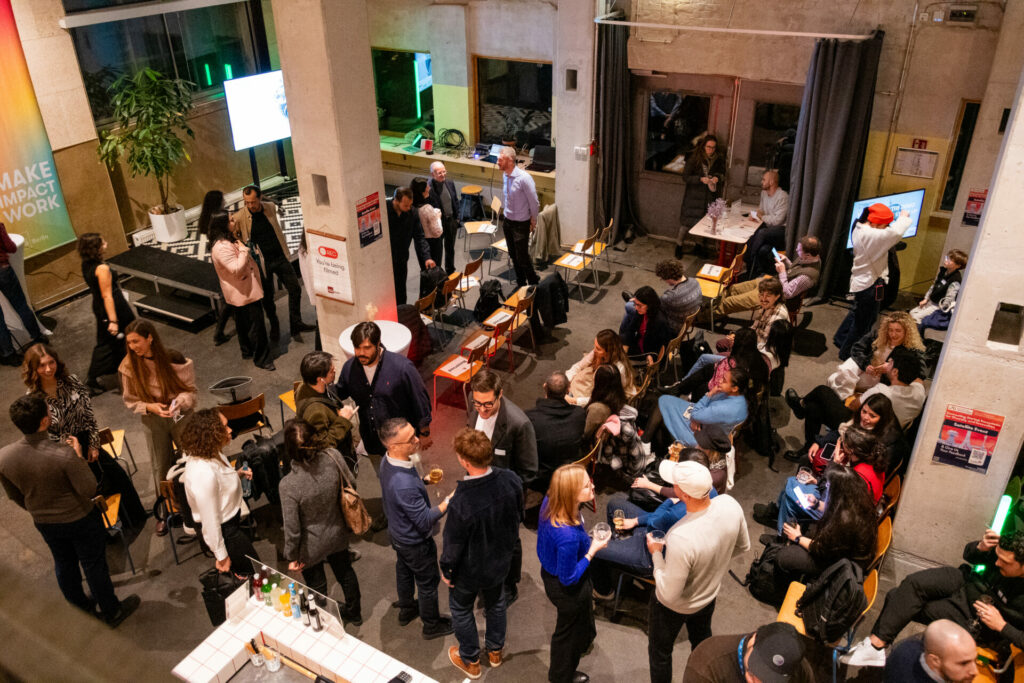
- Across all formats, 1,970 people, representing a diverse mix of actors participated in our events.
- Of those participants, 80% represented mission-driven organisations keen to find a shared purpose and drive forward collective action.
- More than 30 cross-sector speakers contributed their expertise at our events and formats.
- The Impact Entrepreneurship Forum alone drew 150 high-level stakeholders from government, industry and academia.
- Our free learning platform, RISE Academy, reached 247 users so far, with 179 based in Germany.
- Our ecosystem database now holds 4,756 stakeholders – a living map of the climate action landscape.
On top of that: 919 downloads of the Trend Report, a 4.9 out of 5 participant satisfaction rating, and a 47.3 million media reach that extended the issue of climate action and innovation well beyond our immediate community.
Our impact doesn’t stop at these numbers. They’re merely a proxy for the increased connection – and therefore strength – of the Climate Action Ecosystem. A nod to the increased accessibility of knowledge and networks for innovators and entrepreneurs working in the intersection between climate and innovation, and the integration of AI as a tool for not just ecosystem building but climate action more broadly.
A proven approach, ready to apply across sectors
For organisations looking to tackle wicked global issues such as climate action – whether as funders, corporate partners, or institutional collaborators – what we built with the Climate Action Ecosystem demonstrates the scale of impact possible when we adopt issue-based ecosystem building.
This project didn’t just convene stakeholders, it created infrastructure. The RISE Academy is a scalable learning platform and our Trend Reports will continue to serve as annual assessments of emerging innovation assets. The ecosystem database is a strategic resource and the network of participants we’ve activated is a community of people who’ve connected, learned, and begun working across sectors on shared problems.
“Impact can’t happen in isolation.” Impact Hub Berlin’s approach is built on exactly that belief, and this project shows what that looks like in practice.