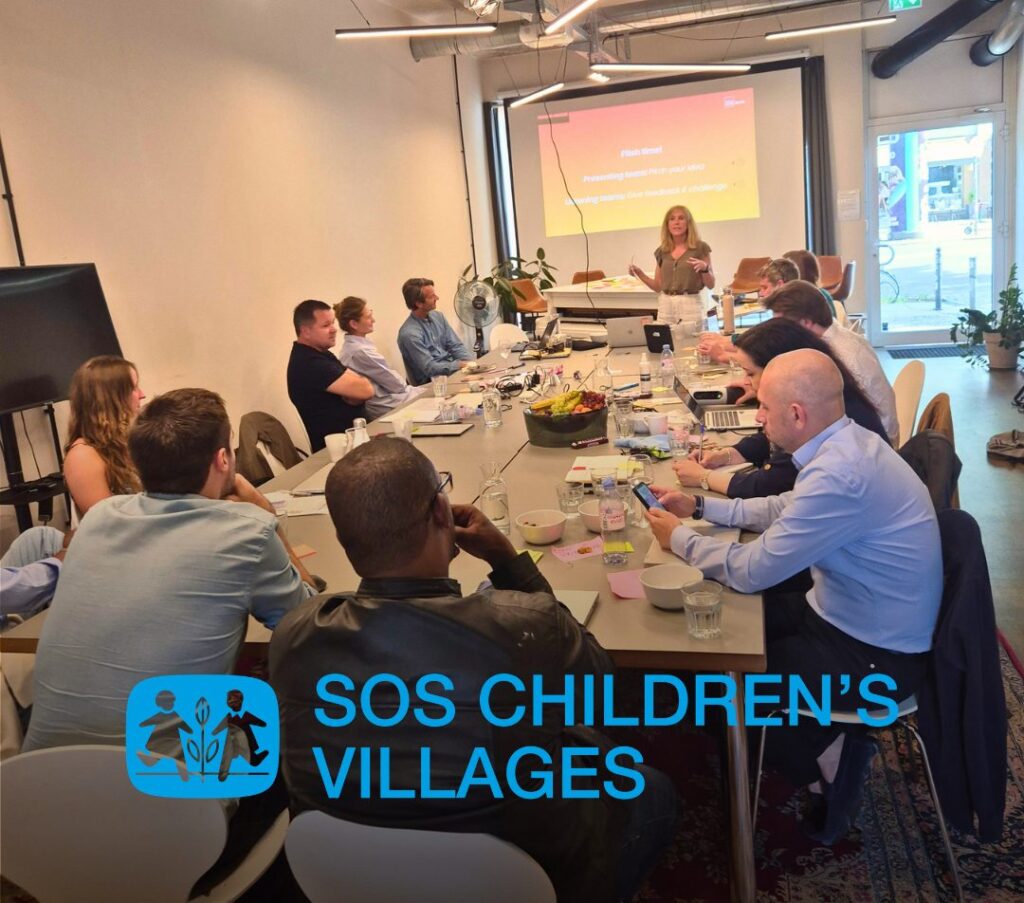
How one of the world's largest children's NGOs built the infrastructure to turn good ideas into scalable solutions
SOS Children’s Villages doesn’t struggle for ideas: working across 136 countries with 2.26 million programme participants, the organisation has thousands of people on the ground every day who see what’s working, what isn’t, and what could be done differently.
The harder question – one that any large, globally distributed organisation faces – is what happens to those ideas. How do you take something that worked in one context and make it work at scale? How do you ensure the right people hear about it, believe in it, and have the tools to build on it?
That was the challenge SOS Children’s Villages brought to Impact Hub Berlin.
The impact gap created by organisational scale
SOS Children’s Villages has programmes around the world – predominantly in East and Southern Africa, where 87% of their operations are based – which reach as many as 633,000 people, as in the case of their programme of health interventions supporting patients in Somalia.
Operating at this size creates a particular kind of organisational challenge. The bigger the footprint of an organisation, the harder it can become to connect the dots. For SOS Children’s Villages, innovation efforts were emerging across geographies, but without the infrastructure to evaluate, prioritise or develop them, good ideas stayed local.
What SOS Children’s Villages needed wasn’t more ideas. It was a way to turn them into something scalable and implementable, while aligning internal stakeholders across regions and departments.
The approach: building the conditions for innovation to flourish
Impact Hub Berlin designed a structured, cross-unit innovation process – drawing on systems thinking, design and futures thinking – that moved through three phases.
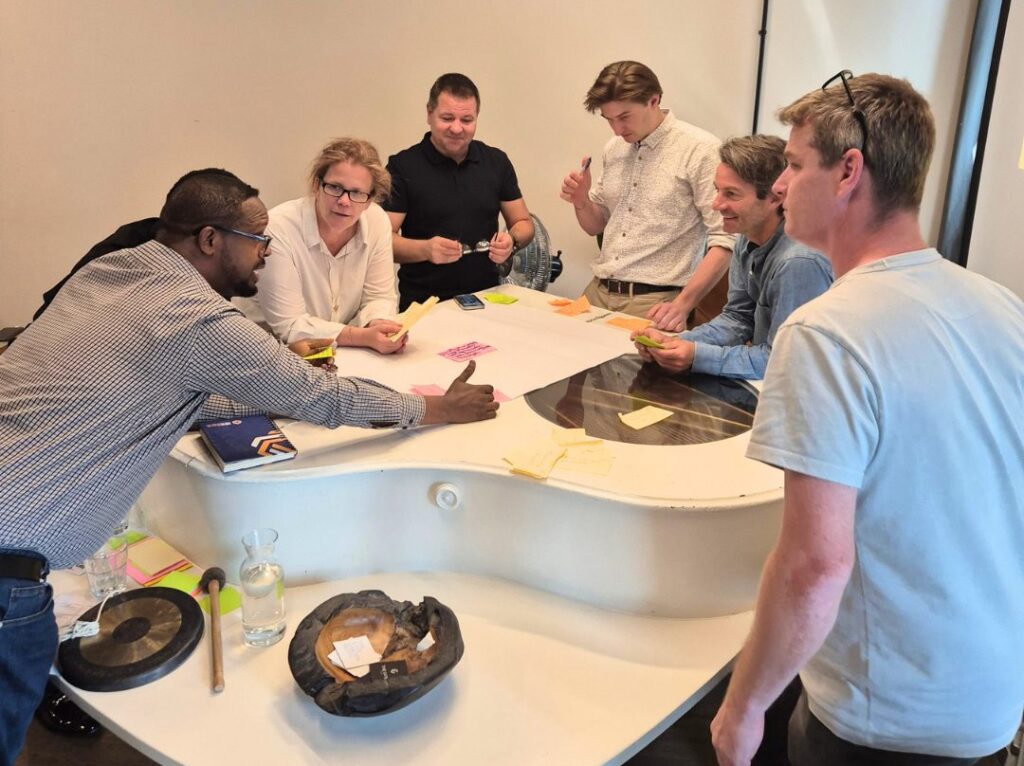
Stakeholder activation came first: representatives from key geographies were brought into the process early, as active participants. Through facilitated alignment and collaboration sessions, teams that rarely worked together began building a shared understanding of the challenge of scaling innovation in their organisation. This created a sense of shared ownership and buy-in for what came next.
Structured exploration then gave those stakeholders the tools to think differently. Workshops combining systems thinking, design methodologies and futures thinking helped teams see their challenges from new angles and identify high-potential ideas. Our facilitation approach integrated external perspectives to challenge internal assumptions – an approach that, as Martin Schmidt from SOS Children’s Villages put it, is “invaluable, especially as we can too easily become caught up in our own ways of thinking.”
From ideas to scale was where the work became structural. Impact Hub Berlin supported the creation of a dedicated ‘Ideas to Scale’ unit within SOS Children’s Villages – an internal team with the mandate, the methodology, and the capability to continue this work independently. Two scalable solutions were selected and prioritised through the process, ready for the next stage of development.
What changed for this international NGO
The two scalable solutions that came out of the process are a meaningful outcome. But the more significant shift was cultural and structural.
SOS Children's Villages now has something it didn't have before: a shared framework of understanding amongst key stakeholders across regions and a permanent home for innovation.
The Ideas to Scale unit gives the organisation a structured way to identify, evaluate and develop ideas from across its global network – not as a one-off exercise, but as an ongoing capability. Collaboration across regions and departments is stronger and internal teams are more confident in using innovation methodologies.
A model for organisations navigating complexity
What SOS Children’s Villages’ story demonstrates is something Impact Hub Berlin has seen across its work with mission-driven organisations of very different sizes and sectors: the biggest barrier to innovation is rarely a lack of ideas. It’s the absence of the infrastructure, alignment, and shared language needed to develop them.
For mission-driven organisations working at scale – whether in humanitarian aid, public health, education, or beyond – building that infrastructure is often the most important investment you can make.
If your organisation wants to shift from isolated ideas to structured, scalable innovation processes, we’d love to talk.