f you want dive deeper into trend research, research in residence or prototyping your research at Impact Hub Berlin, please get in contact with Stephanie.ries@impacthub.net
en
de Cracking the Scale Code: Why Impact Ventures Don't Just Grow, They Spread
To better understand how to scale impact entrepreneurship, Impact Hub Berlin is collaborating with the Seizmic Network, a group of researchers from across Europe that aims to unravel the complex dynamics of impact scaling. For almost 2 years Impact Hub Berlin is hosting researchers in residence focusing their PhD on this very topic.
The collaboration is a synergy to Impact Hub Berlins trend research, identifying annually impact business opportunities in climate action. Find our latest Impact Trend Report on Climate Adaptation here.
This blog post offers a brief introduction to the concept of impact scaling from an academic perspective, while also highlighting the motivation behind the seismic project and the collaboration with Impact Hub Berlin. By connecting academic insights with practical challenges, we hope to reveal challenges to impact scaling and spark some reflections and dialogue on how entrepreneurs can strengthen their ventures and scale impact more effectively.
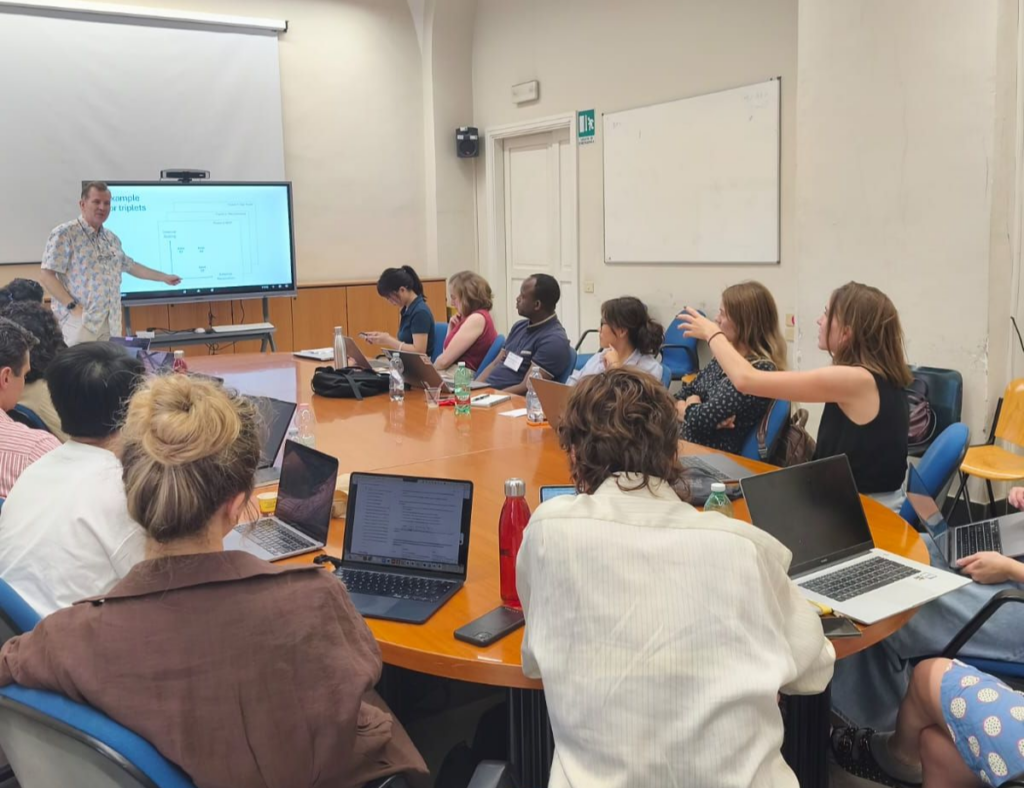
Driven by the belief that impact entrepreneurs play a fundamental role in society’s transition towards a sustainable and equitable future, the Seizmic Network is addressing the challenge of why not many impact ventures manage to scale, and how we can change this. In a network of more than 30 professors and PhD fellows, we are working together to generate actionable knowledge, tools, and training that can help impact entrepreneurs design scalable business models, access the right forms of finance to support their scaling efforts, establish the right types of collaborations, build relevant capabilities, use digital technologies more effectively, and much more.
Different ways of scaling impact
Scaling impact entrepreneurship is about finding ways of reaching and benefitting more communities and ecosystems. This is different from scaling a conventional startup in the sense that it does not necessarily involve growing the organisation and ‘becoming large’. Research on impact entrepreneurship typically distinguishes between three broader scaling pathways: scaling out, scaling up, and scaling deep.
’Scaling out’ involves spreading a proven model to other locations and contexts to reach more people and ecosystems. This can happen via franchising and partnerships, whereby the original entrepreneur remains involved, or it can happen by encouraging and supporting others in replicating the ‘solution’, creating ripple effects by, for example, openly sharing business model design and principles.
‘Scaling up’ involves influencing laws, policies, and institutional arrangements, seeking to change the ‘rules of the game’ to ensure more favorable conditions for social and environmental impact initiatives more broadly. A venture working on circular packaging, for instance, could seek changes in procurement rules or waste regulation that make responsible solutions easier to adopt at scale.
‘Scaling deep’ involves influencing values, beliefs, and norms in society, changing the ‘hearts and minds’ of people so that new ways of thinking and behaving can settle and for example lead to more environmentally friendly consumption patterns.
These pathways are often combined. A venture can replicate its model, work with partners to spread it, and simultaneously push for policy or cultural change that makes the model more durable. For entrepreneurs, the question is thus what to scale and through which pathways.
Scaling an impact venture is particularly challenging
While many innovative ventures and initiatives with transformative potential are established, they seldom manage to scale up their activities, and although not all initiatives necessarily need to scale to have impact, it remains important because it increases the likelihood that a venture or initiative will survive, and because societal-level change requires extending impact beyond local or initial contexts. As argued by Ross, ‘the greatest impediment to solving these [societal] problems is not a lack of innovation. Rather, it is our inability to scale up solutions that we know work”.
Scaling impact entrepreneurship is particularly challenging because impact ventures must do so while maintaining both financial viability and preserving their social and/or environmental purpose. This dual mission makes impact ventures difficult to place within existing categories, as they are neither conventional businesses nor traditional non-profit organisations, which can create challenges around legitimacy and financing.
Impact ventures often operate with thinner margins, longer time horizons, and forms of value that are difficult to evaluate and capture through conventional investment logic. A work-integration venture, for example, might create value for both participants, employers, local communities, and public services at the same time, while no single customer pays for the full benefit created. This can make internal funding for growth more difficult as well as make the venture less attractive to traditional investors, in particular when financial returns are slower, capped, or less predictable.
This is where impact investing, an investment approach seeking to create measurable environmental and social impact alongside financial returns, comes into play to support impact ventures that share the same dual objectives. Impact investment assists ventures to scale impact by providing patient and flexible capital that allows them to invest in long-term growth rather than short-term financial capital. Additionally, impact investors often bring more than just money to the table. They contribute to strategic guidance, governance support, and access to networks that help the impact ventures connect to new markets and partners. In other words, they are adding value to the ventures through non-financial support and strategies oriented to enhance social and/or environmental return on investment.
Impact ventures often work on challenges that are inherently complex for any single actor to address alone. This makes collaboration across sectors essential and helpful. When public actors, investors, businesses, civil society, and other stakeholders come together with mutual respect and shared purposes, they can combine strengths to create meaningful impact. These collaborations also open up space for learning, adaptation, and innovation that none of the actors could have developed independently.
We acknowledge that collaborations can be necessary to access specialised resources and knowledge, yet they also increase complexity. Working with various stakeholders can expose impact entrepreneurs to competing demands and diverse expectations on impact and financial viability. The entrepreneurs might be pressured to prioritise revenue in ways that dilute impact, or prioritise impact in ways that jeopardise financial viability. All of these may, in turn, overshadow the original impact-oriented missions and lead to tensions among partners. A central challenge to impact scaling is thus to scale in ways that balance stakeholders’ demands, reduce tensions, and preserve the purpose that made the venture worth scaling in the first place.
The Seizmic Network
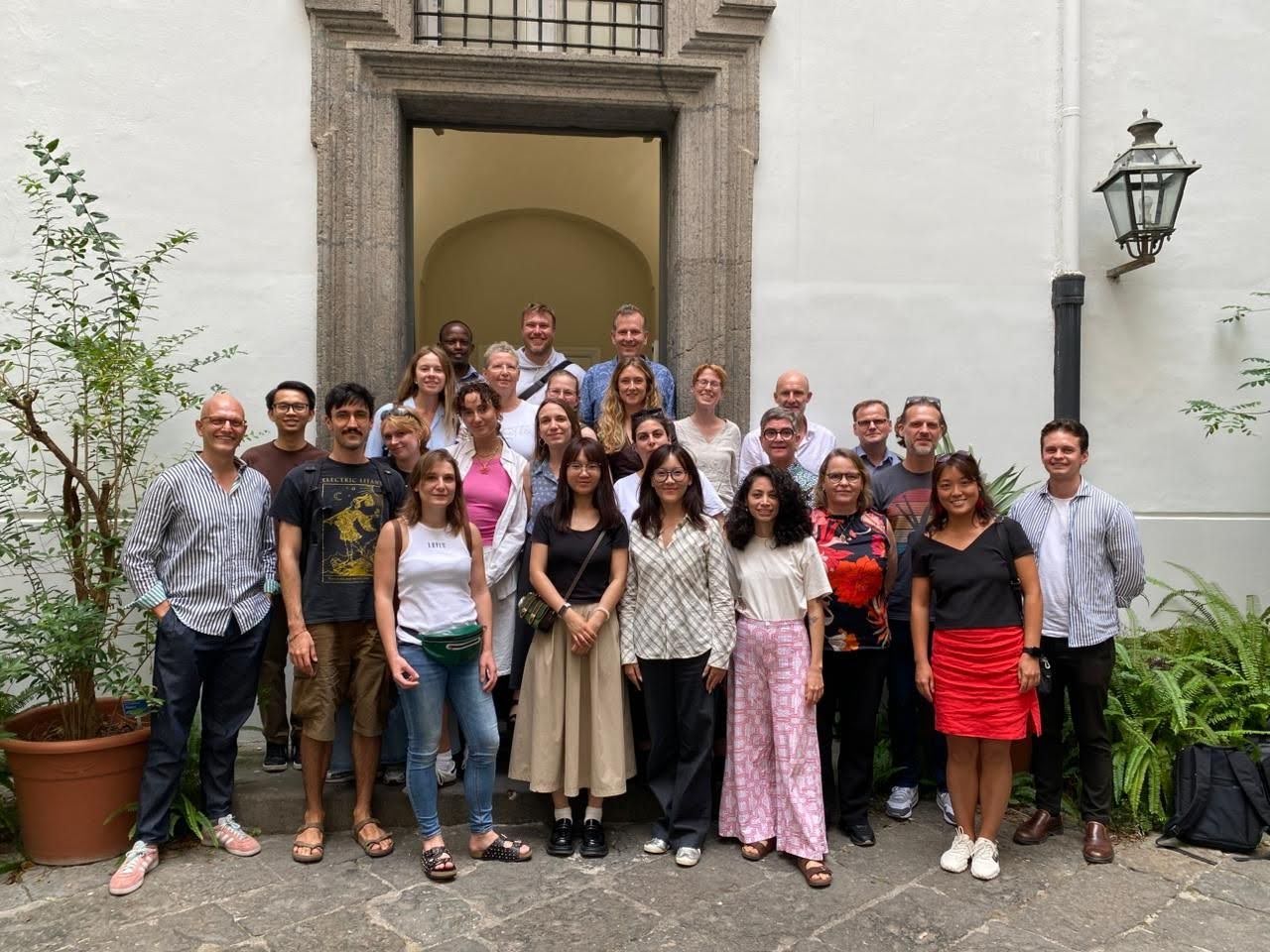
To advance our understanding of how to overcome the challenges to scaling impact entrepreneurship, a group of researchers from different academic disciplines across European universities and business schools has formed the Seizmic Network. In this, we are working together to produce an interdisciplinary framework for impact entrepreneurship scaling and other practical outputs, such as reports and training materials, as well as dissemination aimed at scholars and policymakers.
Across the Seizmic Network, researchers are for instance exploring how transition design can support the development of scalable social business models, how social foresight can help entrepreneurs anticipate societal change and design ventures with broader replication potential, how collaborations across private, public, and civil society sectors can enable impact scaling, how impact measurement and reporting can strengthen scalable business model design, how financing strategies and impact investing can support growth while preserving mission, how education, feedback, and mentoring can build the competencies needed for scaling, and how digital ecosystems and artificial intelligence can expand the reach and effectiveness of social entrepreneurial initiatives.
Impact Hub Berlin plays a central role in these efforts, collaborating with researchers at ESCP Business School, Copenhagen Business School, and Aalborg University to explore how entrepreneurs can design business models and establish collaborations with several partners in the impact investing ecosystem to scale their impact.
Want to learn more about the Seizmic Network? Visit the seizmic website, where research articles and reports will be published, try the seizmic business model app, or listen to the recently launched seizmic stories podcast.
Mandatory disclaimer: The sezimic project has received funding from the European Commission’s Horizon research and innovation programme under the Marie Skłodowska-Curie grant agreement No. 101169098.
References
André, K., & Pache, A.-C. (2016). From caring entrepreneur to caring enterprise: Addressing the ethical challenges of scaling up social enterprises. Journal of Business Ethics, 133, 659–675. https://doi.org/10.1007/s10551-014-2445-8.
Chliova, M., and Ringov, D. (2017). Scaling impact: Template development and replication at the base of the pyramid. Academy of Management Perspectives, 31(1), 44–62. https://doi.org/10.5465/amp.2015.0010.
Colombo, L. A., Bailey, A. R., and Gomes, M. V. (2023). Scaling in a post-growth era: Learning from social agricultural cooperatives. Organization, 31(6), 907–928. https://doi.org/10.1177/13505084221147480.
Dees, J.G. (1998). Enterprising nonprofits. Harvard Business Review, 76(1), 54–66.
Desa, G., and Koch, J. L. (2014). Scaling social impact: Building sustainable social ventures at the base-of-the-pyramid. Journal of Social Entrepreneurship, 5(2), 146–174. https://doi.org/10.1080/19420676.2013.871325.
Ebrahim, A., Battilana, J., and Mair, J. (2014). The governance of social enterprises: Mission drift and accountability challenges in hybrid organizations. Research in Organizational Behavior, 34, 81–100. https://doi.org/10.1016/j.riob.2014.09.001.
Eiselein, P., and Dentchev, N. A. (2021). Scaling social impact: What challenges and opportunities await social entrepreneurs. In D. M. Wasieleski and W. J. Wasieleski (Eds.), Social Entrepreneurship (pp. 145–172). Business and Society 360(5), Emerald Publishing Limited. https://doi.org/10.1108/S2514-175920220000005007.
Ganz, M., Kay, T., and Spicer, J. (2018). Social enterprise is not social change. Stanford Social Innovation Review, 16(2), 59–60. https://doi.org/10.48558/Z8F0-3080.
Hehenberger, L., Mair, J., & Metz, A. (2019). The assembly of a field ideology: An idea-centric perspective on systemic power in impact investing. Academy of Management Journal, 62(6), 1672-1704. https://doi.org/10.5465/amj.2017.1402.
Islam, S. M. (2020) Towards an integrative definition of scaling social impact in social enterprises. Journal of Business Venturing Insights, 13, e00164. https://doi.org/10.1016/j.jbvi.2020.e00164.
Moore, M.-L., Riddell, D., and Vocisano, D. (2015). Scaling out, scaling up, scaling deep: Strategies of non-profits in advancing systemic social innovation. The Journal of Corporate Citizenship, 58, 67–84. https://www.jstor.org/stable/jcorpciti.58.67.
Nachyła, P., & Justo, R. (2024). How do impact investors leverage non-financial strategies to create value? An impact-oriented value framework. Journal of Business Venturing Insights, 21, e00435. https://doi.org/10.1016/j.jbvi.2023.e00435.
Ometto, M. P., Gegenhuber, T., Winter, J., and Greenwood, R. (2019). From balancing missions to mission drift: The role of the institutional context, spaces, and compartmentalization in the scaling of social enterprises. Business & Society, 58(5), 1003-1046. https://doi.org/10.1177/0007650318758329.
Ross, R. K. (2014). We Need More Scale, Not More Innovation. Stanford Social Innovation Review, 12(2), A18–A19. https://doi.org/10.48558/96N4-RX79.
Santos, F. M. (2012). A positive theory of social entrepreneurship. Journal of Business Ethics, 111, 335–351 (2012). https://doi.org/10.1007/s10551-012-1413-4.
Westley, F., Antadze, N., Riddell, D. J., Robinson, K., and Geobey, S. (2014). Five configurations for scaling up social innovation: Case examples of nonprofit organizations from Canada. The Journal of Applied Behavioral Science, 50(3), 234-260. https://doi.org/10.1177/0021886314532945.