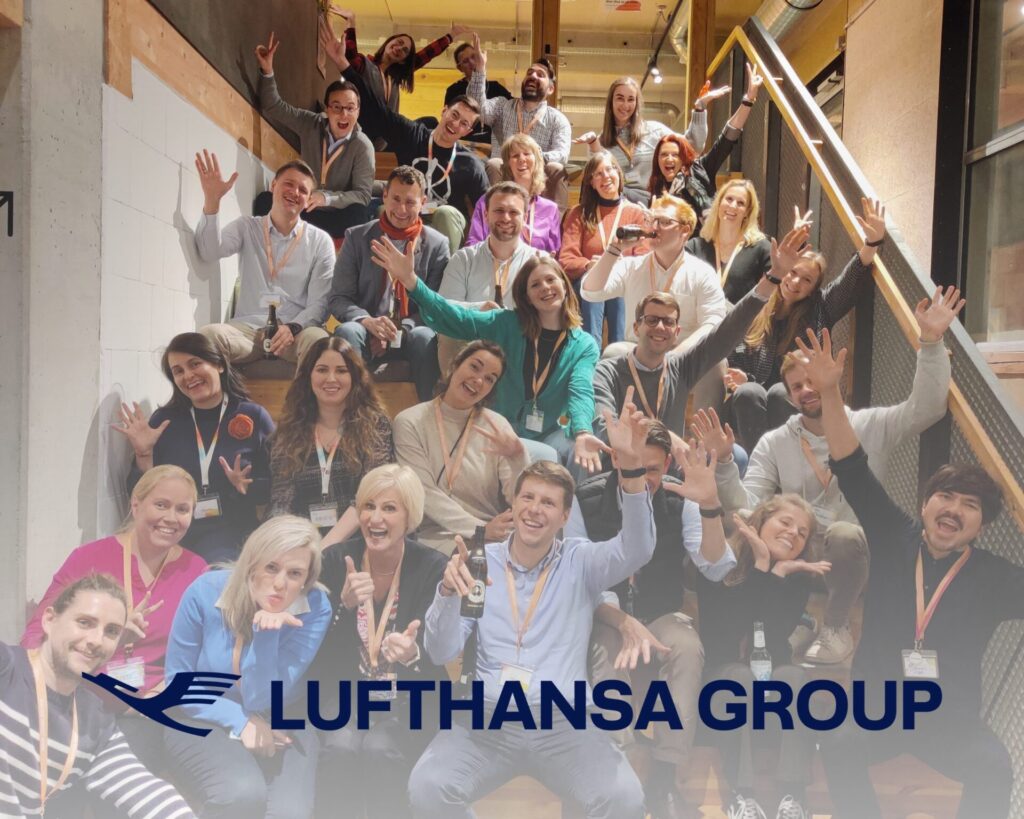
How Lufthansa Group activated internal talent to transform ESG ambition into scalable solutions
Aviation and logistics is not an easy sector to talk about sustainability. It’s among the largest contributors to emissions and the hardest to transform. Few sectors face as much pressure to change, and at the same time, have the most potential to create change.
Lufthansa Group was well aware of this challenge and had clear environmental, social and governance ambitions written into their strategic priorities. This came not only from the mounting regulatory pressure of EU ESG, but an internal motivation to leverage their expertise and reach to do things differently – and in doing so, show the industry the way.
The aviation group already had an established network of sustainability champions. What was missing was the infrastructure, knowledge and resources needed to enable those employees to drive the shift from ambition to implementation.
That’s where Impact Hub Berlin came in, alongside The DO School, to implement the Green Explorers Programme.
The common gap between ambition and action
Lufthansa Group’s sustainability commitments were ambitious – as they need to be for a company operating in one of the highest-emitting sectors in the world. But translating those commitments into scalable solutions is a different challenge altogether.
Inside large organisations, this gap often shows up in familiar ways: teams are aware of the urgency, but lack the tools, the external perspectives, or simply the structured space to move from understanding a problem to prototyping a solution. Sustainability becomes something people read about, rather than something they build.
Lufthansa Group wanted to close that gap – not just for a handful of specialists, but for everyone across their affiliated companies and departments motivated to create change.
A three-pillared approach to cultivate a culture of innovation
Impact Hub Berlin co-designed a structured internal innovation programme built around three pillars, taking employees on a journey from awareness to action.
Inspire:
- A workshop utilising systems thinking and futures foresight gave programme sponsors and managers the tools to think through complex ESG challenges and design goal-oriented problem-statements to guide ideation.
- Impact Innovation Exploration Journeys connected Lufthansa teams directly with startups from our ecosystem, working on similar ESG challenges. This placed employees face-to-face with innovation happening outside their own walls, inspiring more diverse thinking.
- An ongoing Impact Talk Series, featuring experts, entrepreneurs and changemakers, kept that mindset alive throughout the programme.
Connect:
- Employees were connected directly with startups, experts and the wider impact ecosystem to facilitate effective knowledge exchange.
- Intentional engagement with senior management, technical teams and cross-programme collaboration reduced silo-thinking and meant ideas weren’t just left to the side when the programme ended.
- Peer learning and external perspectives became part of the everyday working culture, not a one-off event.
Enable:
- Exploration journeys and Design Thinking workshops gave teams a structured way to translate ESG priorities into concrete business applications.
- A 48-hour hackathon pushed those ideas into prototypes – tangible responses to real challenges.
- Throughout the programme, experienced entrepreneurs and experts provided ongoing mentorship as ideas took shape.
What changed for the group and for the talent engaged in this programme
From the hackathon, teams left with early-stage prototypes to address real ESG challenges – a tangible starting point to iterate and test their ideas. For the strongest ideas – evaluated by senior management – the journey didn't stop there. They moved forward to a tailored bootcamp and six-month acceleration programme, with a focus on business modelling, prototyping, impact measurement and pilot readiness. By the end, they had a solution ready to implement and a senior management team ready to invest.
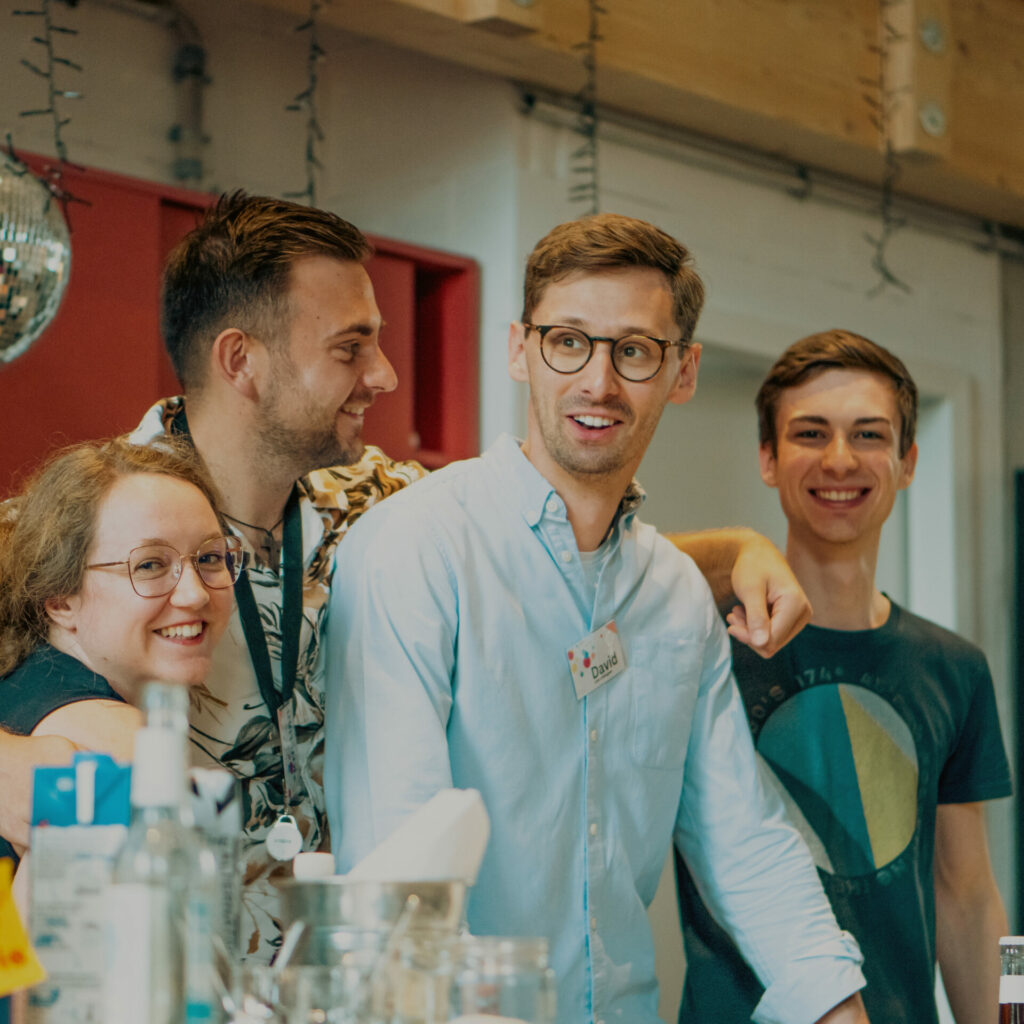
It wasn’t just solutions that Lufthansa Group gained. It was a committed and connected network of talented employees, teams with stronger capability in systems thinking and innovation methodologies, and a stronger connection to the entrepreneurial ecosystem.
By the end of the programme, Lufthansa Group had activated internal talent as genuine drivers of sustainability innovation. They weren’t just the sustainability managers – they were the engineers, the data analysts, the HR leads and partnership managers. They were the people asked by their children, “What are you doing to save the planet?”. Now they were equipped to actively build solutions to do so.
These are outcomes that outlast any single project.
A proven approach, ready to apply across sectors
What this programme demonstrates is that ESG innovation doesn’t have to live in strategy documents or sit with a handful of specialists. When employees are given the right tools, the right external connections, and the space to build, ambition turns into action.
For large organisations in high-impact sectors – aviation, logistics, mobility, or beyond – the combination of systems thinking, ecosystem access, and hands-on prototyping creates exactly the kind of internal capability that sustainability transformation depends on.
If your organisation wants to explore what an internal innovation programme could look like for your teams, we’d love to talk.