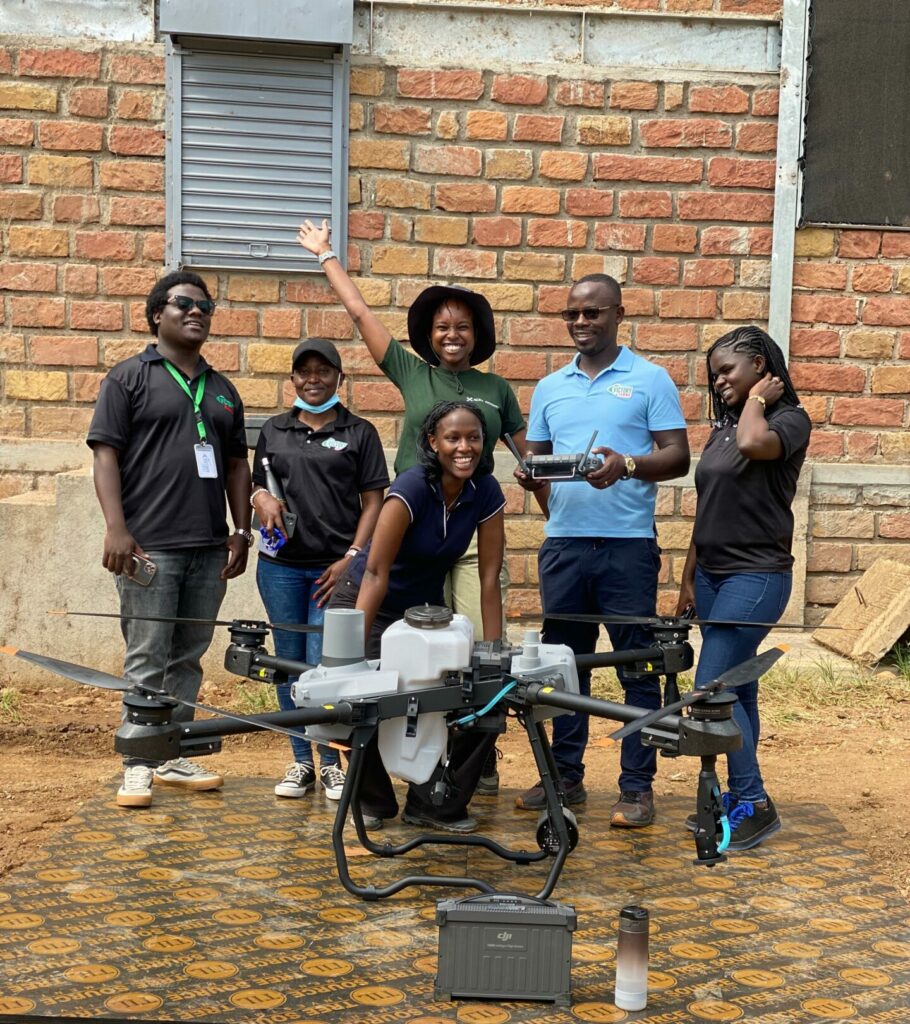
Acre Insights (Kenya)
en
de 
For a long time, “drone” meant one of two things: surveillance or weddings. They were instruments of force or photography, accessible only to those with power or money to decide who gets to see what.
That definition no longer holds. Drones can do so much more – they can be tools for impact. And Africa has been instrumental in pivoting this.
Civil drones have become accessible tools for tackling real challenges and closing distances faced by local communities. The distance between a mother giving birth and an emergency blood transfusion. Between critical infrastructure and the workers expected to maintain it. Between a farmer’s contribution to carbon projects and the income they receive. Between our understanding of ecosystem degradation and the reality on the ground.
What’s changing in Africa’s drone landscape isn’t the technology itself. It’s the problems it’s being asked to solve and the people picking up the tool to solve them.
You can see how the tools and solutions are taking shape and growing at the Global Conservation Tech & Drone Forum 2026 in Nairobi, Kenya, from 2–6 March.
WHEN DISTANCE IS THE PROBLEM, THE SKY BECOMES PRACTICAL
Ten years ago, drones were largely absent from development conversations on the continent. Where they did appear, it was often with suspicion: drones were seen as expensive, foreign, hard to regulate, and disconnected from local realities.
Today, the narrative has changed. Use cases have expanded to development and impact fields, and the technology is being leveraged by innovators in Africa to help shape a more sustainable and inclusive future.
In agriculture, a sector that employs roughly two-thirds of Africa’s workforce, drones are not just flying cameras but key decision tools. They’re opening doors previously only open to large commercial farms. Previously, crop health diagnostics, irrigation mapping, and yield forecasting were abstract concepts for many. Drones can make these inputs more accessible, so even small-scale farmers can make better decisions with fewer resources.
In climate action and environmental monitoring, drones are becoming extensions of human decision-making, relieving limited capacity. They don’t replace human judgment; they widen it. From land-use mapping to conservation tracking and disaster early-warning systems, they allow governments and communities to see faster, respond earlier, and plan with evidence instead of estimates.
In healthcare, the shift has perhaps been the most impactful. When Rwanda-based Zipline began delivering blood and medical supplies to remote facilities in 2016, it reframed drones as critical infrastructure capable of saving lives. Delivery times to emergencies dropped from hours to minutes, lives followed and the status of drones shifted from experimental to systemic. Now they’ve expanded across the continent, scaling their impact with every flight.
A MARKET DEFINED BY COMMUNITY NEEDS
Despite the continent’s extensive and impactful use cases, Africa still represents a relatively small share of the global civil drone market. But don’t be misled. The shift has only just begun. The opportunity for innovation is, well, as vast as the continent.
Across the Africa and Middle East region, the civil drone market is projected to exceed USD 7 billion by 2030, driven largely by industrial inspection and precision agriculture.
Innovators in Africa are designing solutions for local realities: power lines that stretch for hundreds of kilometres, solar assets in harsh environments, farms that depend on rainfall precision more than prediction. And like many examples of development, startups in Africa are leapfrogging traditional ownership models of drones as assets and with it, the financial hurdles that come with them.
The market is defined by need and impact rather than means. Drone technology is constantly evolving, as are the laws that regulate them. Many of the most practical advances, from modular repair systems to hybrid hardware-software models, are coming from startups building under constraint. They prioritise durability, simplicity and affordability over complex features or aesthetic design. Innovators in Africa are leveraging locally maintained drones-as-a-service or producing their own low-cost drones from accessible materials and accelerating their ideas to impact.
THE AFRICAN INNOVATORS SHAPING THE MARKET
Hundreds of startups now operate across the continent’s civil drone space, solving immediate and pressing challenges. Over the past three months, we’ve supported ten of these mission-oriented ventures to accelerate the development of innovations “Made in Africa”.
In agriculture, Cradle and PF Aerial Ops and Luna Drones are reworking how farmers engage with their land, localising precision tools, improving machinery quality, and turning aerial data into decisions that make sense at the scale of small and medium farms.
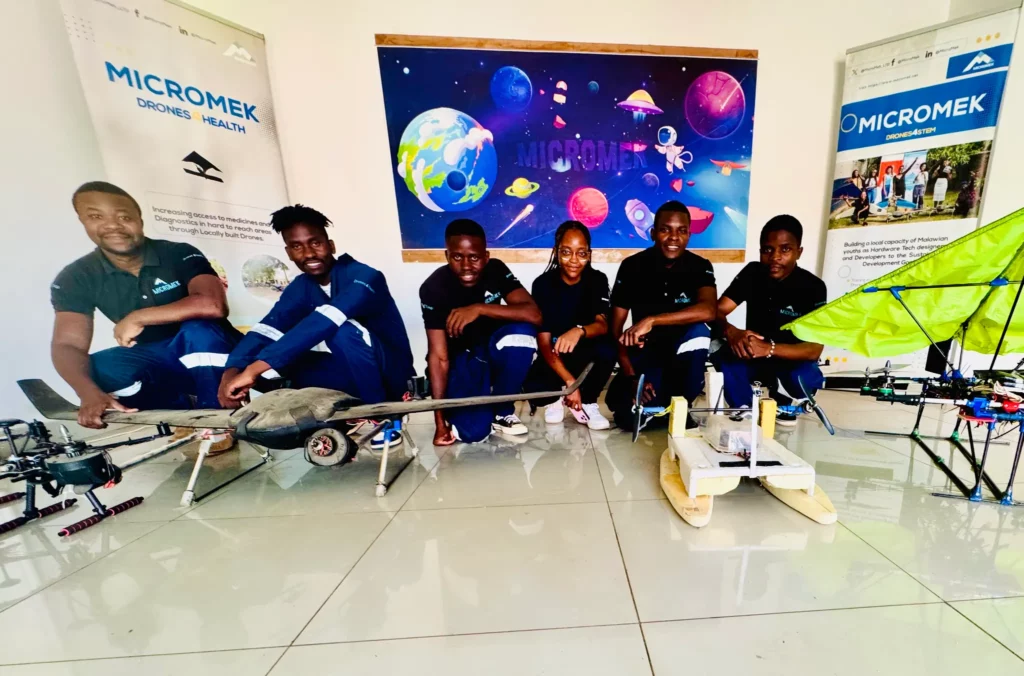
MicroMek (Malawi)
In green infrastructure and health logistics, MicroMek, Titan Air Mobility and IOM Solutions are addressing the less visible layers of infrastructure: maintenance, uptime, and access. Their work focuses not on replacement, but on keeping systems operational where failure carries real human cost.
In climate action, Phantom Technologies, Acre Insights, Ciella and Ayogreen are using drones to make environmental change legible — mapping degradation, tracking emissions, and monitoring restoration with data that can be verified and acted upon.
Together, these ventures reflect the breadth of Africa’s civil drone ecosystem as it exists today: practical, locally grounded, and deeply attuned to context. They are not chasing novelty. They are responding to need.
INTENTIONAL SUPPORT FOR INTENTIONAL IMPACT
For innovation to be local and impactful, support must be intentional and collaborative.
That’s the logic of the support we’ve been providing as part of the Innovate Africa Challenge on Civil Drones — a multi-phase initiative supporting civil drone solutions for agriculture, green infrastructure, and climate action.
Intention and collaboration are its core. The challenge is part of the Triangular Cooperation for Digital Innovation Made in Africa programme, funded by the German Federal Ministry for Economic Cooperation and Development (BMZ), and delivered in collaboration with Deutsche Gesellschaft für Internationale Zusammenarbeit (GIZ) GmbH and the Smart Africa African Union Development Agency-NEPAD, with support from Impact Hub Kigali and Impact Hub Abidjan.
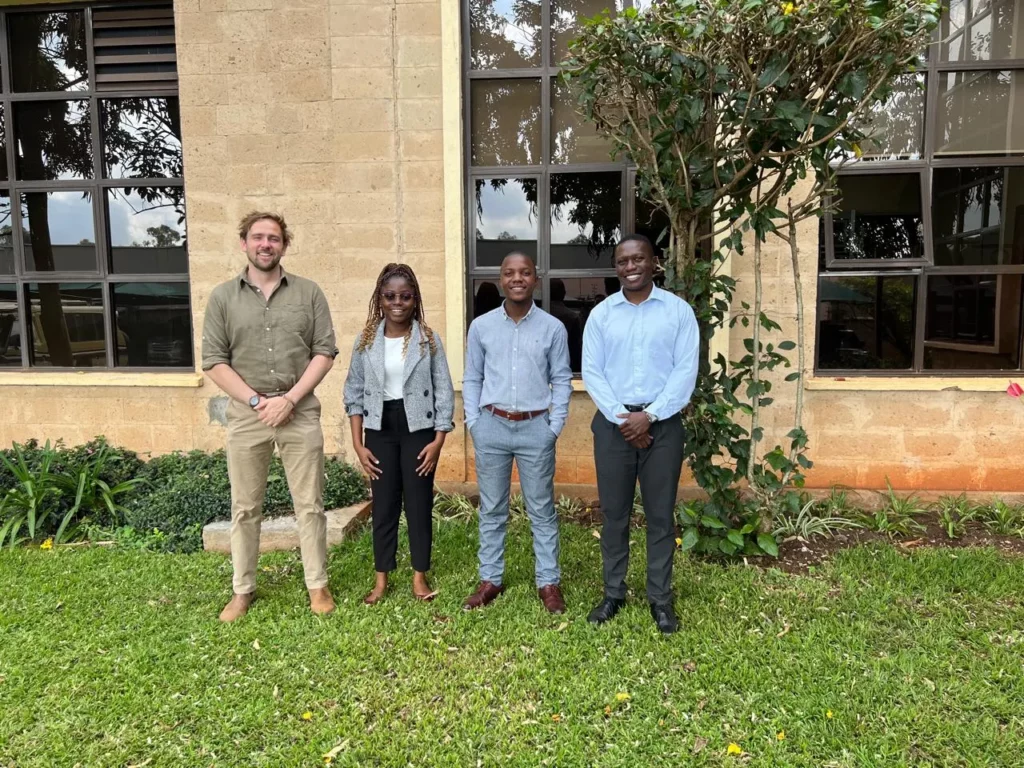
Phantom Technologies (Kenya)
Over four weeks, more than 140 teams from 22 African countries applied for the Challenge. The ten ventures highlighted above proceeded to the Ideation phase – each responding to a distance, a need: between land and insight, energy and maintenance, ecosystems and protection, care and access.
Look across the selected teams — from precision agriculture in Kenya to drone-enabled conservation in Rwanda, from local manufacturing in Malawi to emissions monitoring in Côte d’Ivoire — and a pattern emerges.
These startups are not trying to impress global markets, they are working locally — and reliably. That’s not a limitation. It’s a strategy that can lead to scale that is sustainable.
From this group, the five ventures who could demonstrate both ambition and readiness advanced into the Incubation phase. They demonstrated an ability to move from concept to operation, from potential to impact in agriculture, green infrastructure and climate action.
AGRICULTURE 🌾
- Cradle (Rwanda): Bringing machines within reach, enabling small farms to grow stronger and thrive by providing affordable access to drone technology and related services.
- JPF Aerial Ops (Côte d’Ivoire): Utilizing drone mapping and 3D printing to help farmers upgrade the quality of their production, ensuring customized and high-quality parts for local farming machinery and drones
GREEN INFRASTRUCTURE 🏥
- MicroMek (Malawi): A local drone building startup focusing on medicine delivery. By localizing drone manufacturing and repair, they are building resilient, self-sufficient infrastructure to support health logistics in remote areas.
CLIMATE ACTION 🌍
- Acre Insights (Kenya): Localizing drone tech for smallholder and underserved farmers, offering accessible measuring, monitoring and mapping for forestry and farming related carbon projects..
- Phantom Technologies (Kenya): A UAV consultancy specializing in drone solutions for conservation, infrastructure monitoring, and AI-driven analytics, ensuring critical natural resources and infrastructure are effectively managed and protected.
LOOKING AHEAD: FROM INCUBATION TO IMPLEMENTATION
These startups are now refining systems meant to work in real conditions: technologies that can be maintained locally, integrated into existing workflows, and deployed where outcomes are measurable.
This is true for both target countries for the implementation phase: Rwanda and Côte d’Ivoire — two countries that have deliberately aligned policy, innovation, and private sector participation.
Rwanda’s performance-based regulatory environment has already shown what’s possible when governments remove friction instead of adding it. Côte d’Ivoire’s pro-business reforms and openness to private-sector solutions have created similar conditions. Neither context is perfect. Both are instructive.
Their ventures are now approaching the final stage of the Innovate Africa Challenge on Civil Drones, where one solution will receive up to €50,000 in funding to implement their solution.
MEET THE STARTUPS SHAPING OF THE NEW NARRATIVE
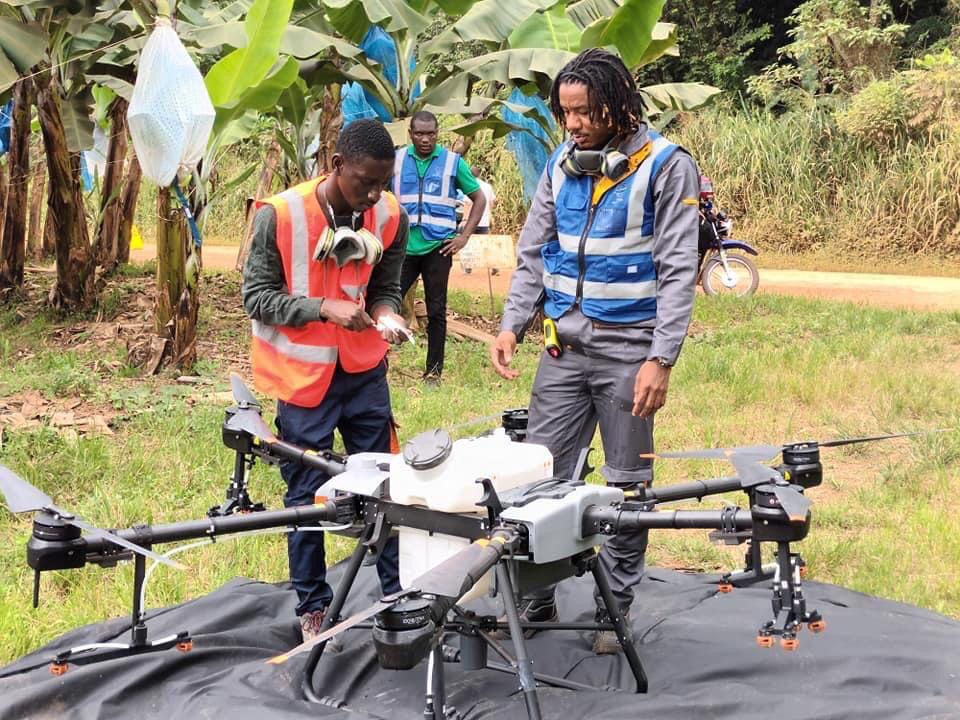
Africa’s drone story isn’t about airspace. It’s about access.
Access to services that arrive when they’re needed, access to data that changes decisions on the ground, access to tools that don’t require perfection to function.
Access to investors and partners who can help local innovators validate and scale their impact.
The future of drones on the continent won’t be defined by altitude or autonomy. It will be defined by whether these systems remain rooted in the realities that shaped them.
Our startups make drones fly. You can be part of this story by helping them land exactly where they’re needed.
Find us at the Global Conservation Tech & Drone Forum expo in Nairobi, Kenya, from the 3rd March. The teams will pitch for the implementation funding on the main stage on 4th March.
Will you be there? Reach out to ellie.leopold@impacthub.net and rahman.mabano@giz.de to find out more about the startups you could support.
This blog was a collaborative piece by Impact Hub Kigali and Impact Hub Berlin, supported by the Deutsche Gesellschaft für Internationale Zusammenarbeit (GIZ) GmbH and Smart Africa Alliance,